
Transforming Care Takes More Than Technology
30 Sep 2026
The 2026 New Zealand Private Surgical Hospitals Association Conference in Auckland brought together leaders from across the health sector under the theme Transforming Surgical Care – Innovating for a Healthier Future.
It was a timely theme. Private hospitals are operating in an environment of increasing demand, workforce pressure, rising costs and changing expectations about where and how care should be delivered. Technology is also moving quickly, particularly AI, while funders are placing greater emphasis on outcomes, productivity and value.
Across the conference, however, the discussion was broader than technology or surgical capacity. A consistent theme was the need to think differently about the patient journey, the relationships between different parts of the health system and the leadership required to make change happen.
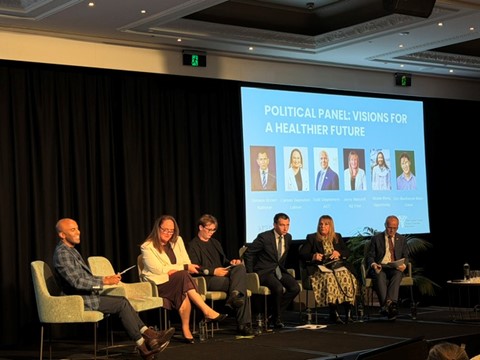
Moving beyond organisational boundaries
Opening keynote speaker Andy Wilkins, founder of Future of Health in the UK, provided a useful framework for thinking about the challenge.
His central proposition was that healthcare needs to move beyond a focus on individual organisations and episodes of treatment towards a more connected view of health. Clinical care is important, but so are families, communities, environments and the wider determinants that influence health.
His Three Horizons framework described the current system as Horizon One and the future system we want to create as Horizon Three. The real work sits between the two: testing new models, developing relationships and creating the conditions that allow successful ideas to become normal practice.
For hospitals, the implication is significant. The future is not necessarily about hospitals becoming less important. It is about hospitals becoming more connected to primary care, community services, rehabilitation and the wider health system.
Put simply, patients experience a journey. They don’t experience the organisational boundaries we have created around their care.
Surgery is only part of the outcome
That point was reinforced by ACC’s presentation on rehabilitation, secondary care and return to work.
ACC has seen substantial growth in rehabilitation and treatment expenditure over the past decade, while some measures of recovery and return to work have deteriorated. Since 2017, median post-operative weekly compensation duration has increased from 53 to 80 days, while the average has increased from approximately 73 to 148 days.
ACC’s message was not that surgery or necessary care should be reduced. It was that treatment needs to be better connected to recovery.
For private hospitals, this raises an interesting question about where their role begins and ends. Increasingly, funders will be interested not only in the quality of the surgical intervention, but in what happens before surgery, how patients transition back into the community and whether the overall pathway delivers the intended outcome.
ACC indicated that it is looking at its commissioning approach, including stronger links between treatment, rehabilitation and return to work. This creates both a challenge and an opportunity for the private sector.
Start with the problem, not the technology
AI was another major theme, particularly in the presentation from ProCare.
The examples demonstrated that AI is no longer sitting on the horizon. It is already being used in clinical documentation, decision support, risk assessment, referrals and administrative processes.
The more useful discussion, though, was about starting with the problem.
Where is clinical time being lost? What creates unnecessary delay? Where could the patient experience be improved? What administrative work could be removed? And where could better information support earlier intervention?
These are service and leadership questions before they are technology questions.
There are also risks to manage, including privacy, cybersecurity, bias, clinical safety and equity. AI can support clinical judgement and release capacity, but it does not replace accountability, empathy, communication or an understanding of the context in which care is delivered.
Successful adoption will depend as much on leadership and change management as on the technology itself.
Relationships matter
Tamati Shepherd-Wipiiti, CEO of Ngāti Hine Health Trust, brought another perspective to the discussion.
His challenge was to consider who our patients and workforce will be in ten or twenty years, and therefore which relationships health organisations should be developing now.
Private hospitals bring specialist capability, infrastructure, technology and clinical expertise. Māori and community providers bring trusted relationships, community reach, cultural capability and an understanding of the wider circumstances affecting patients and whānau.
Bringing those capabilities together offers opportunities across referral, preparation for surgery, discharge, rehabilitation and ongoing care.
His point was also refreshingly practical. Partnerships do not necessarily begin with contracts and complicated governance arrangements. Sometimes they begin with a conversation and a cup of tea.
Supporting the next generation of leaders
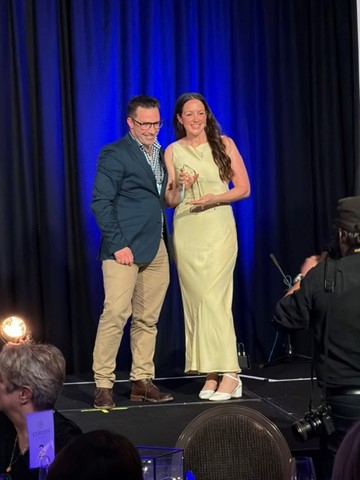
HG was also proud to support the NZPSHA Conference for the second consecutive year as a conference sponsor. This year, we were particularly pleased to extend that support through sponsorship of one of the Emerging Leader Awards, recognising the next generation of leaders who will help shape the future of healthcare in New Zealand. Supporting leadership at every stage of the journey is central to what we do at HG, making the opportunity to recognise and celebrate emerging talent especially meaningful.
The leadership challenge
HardyGroup’s New Zealand National Manager David Price brought many of these themes back to leadership.
Reflecting on his career from occupational therapy through clinical leadership, hospital operations and system transformation to executive search and leadership development, David challenged the idea that leadership careers develop in a predictable straight line.
They are often more like a game of snakes and ladders.
There are steps forward, sideways moves, setbacks and occasions when the next move is far from obvious. In retrospect, those experiences often make sense. At the time, they can feel anything but planned.
That matters because today’s health leaders are being asked to hold a great deal at once: workforce capacity and fatigue, financial constraint, productivity, technology, changing models of care and continuing responsibility for safety, quality and trust.
David also made the point that senior leadership can be lonely. As responsibility increases, the number of people with whom a leader can genuinely test an idea or admit uncertainty can become smaller.
His three questions for leaders were simple and useful:
- What has my journey taught me that this moment needs?
- What am I not seeing?
- Who can challenge my thinking safely?
They connected strongly with the wider conference discussion.
What comes next
NZPSHA demonstrated that there is no shortage of challenges facing healthcare, but there are also considerable opportunities.
AI can release clinical capacity and change how services operate. Better commissioning can connect treatment more closely with outcomes. Partnerships with primary care, community and Māori providers can improve patient journeys. Public and private capacity can be used more effectively together.
None of these things happens simply because the strategy says it should.
They require leaders who can work across organisational boundaries, build relationships, challenge established ways of working and remain open to having their own assumptions challenged.
Transforming surgical care will require investment, technology and new models of care. Ultimately, however, the quality of that transformation will depend on the quality of the leadership behind it.
Leadership doesn’t develop in isolation. If the challenges raised at NZPSHA resonate with you, HardyGroup works with health leaders across Australia and New Zealand to create the space to test thinking, challenge assumptions and learn from peers facing many of the same pressures. If you’re thinking about what your leadership needs next, we’d welcome the conversation.
